Roasted Root Vegetable Buddha Bowl – Colorful, Cozy, and Satisfying
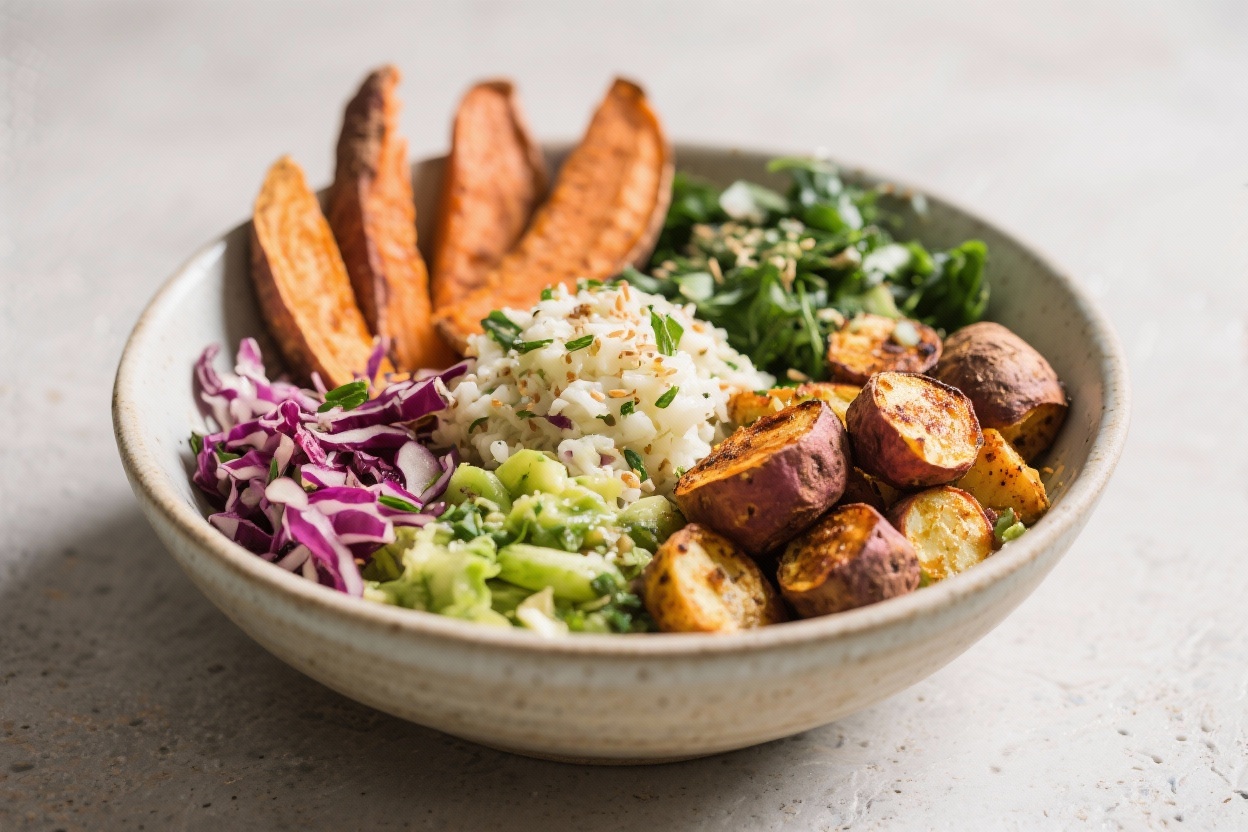
This Roasted Root Vegetable Buddha Bowl is simple, hearty, and full of everyday flavor. It’s the kind of meal that feels cozy but still bright, with caramelized veggies, creamy tahini dressing, and plenty of texture. You’ll roast a rainbow of roots, add a grain for staying power, and finish with fresh greens and crunchy toppings.
It’s easy to prep, easy to customize, and great for lunches or weeknight dinners.
Why This Recipe Works
- Roasting builds flavor: High heat turns root vegetables sweet and crisp around the edges.
- Balanced bowl: You get complex carbs, healthy fats, plant protein, and fiber in every bite.
- Make-ahead friendly: Everything holds up well in the fridge, so it’s perfect for meal prep.
- Flexible format: Swap veggies, grains, or toppings based on what you have.
What You’ll Need
- 2 cups cubed sweet potatoes
- 2 cups cubed carrots or parsnips
- 2 cups cubed beets (golden or red)
- 1 red onion, cut into wedges
- 2 tablespoons olive oil
- 1 teaspoon smoked paprika
- 1 teaspoon ground cumin
- 1/2 teaspoon garlic powder
- Salt and black pepper, to taste
- 2 cups cooked grain (quinoa, farro, or brown rice)
- 2 cups greens (baby spinach, arugula, or kale)
- 1 can (15 oz) chickpeas, drained and rinsed
- 1 avocado, sliced
- 1/4 cup toasted pepitas or chopped nuts
- Lemon wedges, for serving
Tahini Dressing:
- 1/4 cup tahini
- 2 tablespoons lemon juice
- 1 tablespoon maple syrup or honey
- 1 small garlic clove, grated
- 2–4 tablespoons warm water (to thin)
- Salt and pepper, to taste
Step-by-Step Instructions
- Heat the oven: Preheat to 425°F (220°C). Line two sheet pans with parchment for easy cleanup.
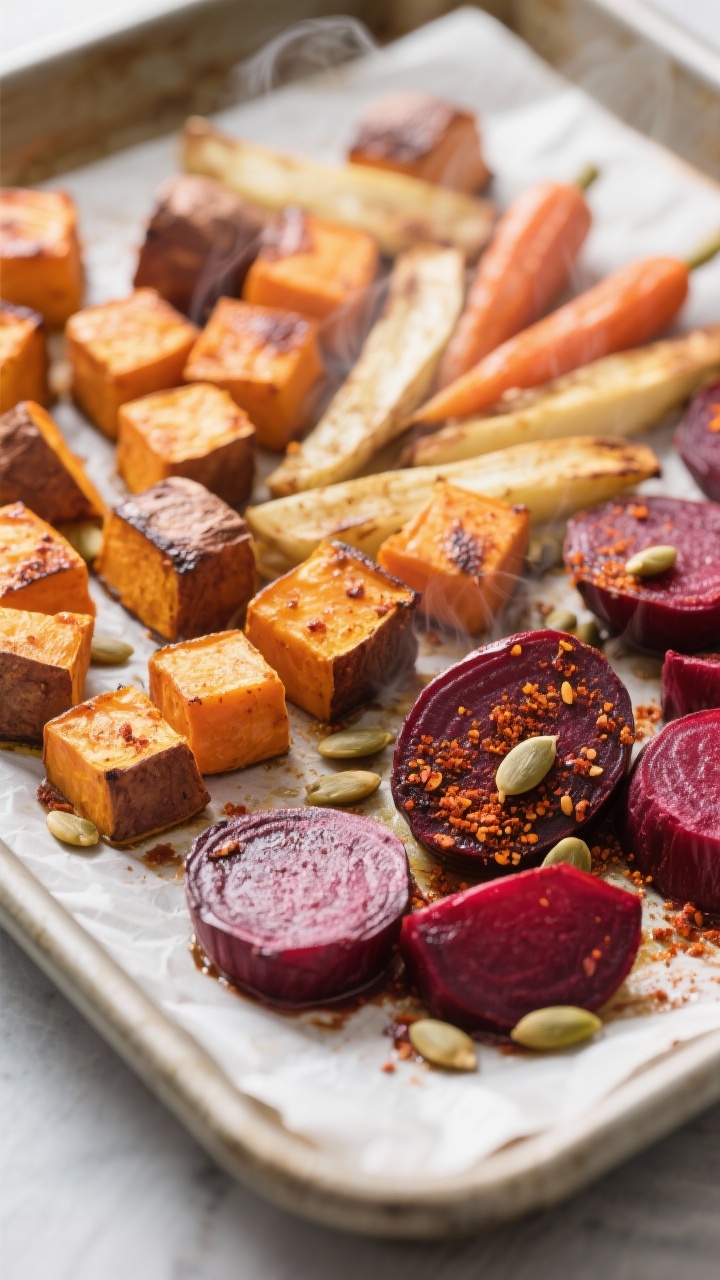
- Prep the vegetables: Cut everything into similar 3/4-inch cubes so they cook evenly. Keep beets on a separate pan to avoid staining.
- Season well: Toss veggies with olive oil, smoked paprika, cumin, garlic powder, salt, and pepper.
Spread in a single layer with space between pieces.
- Roast: Bake for 25–35 minutes, flipping once. They’re done when tender with browned edges. Beets may need a few extra minutes.
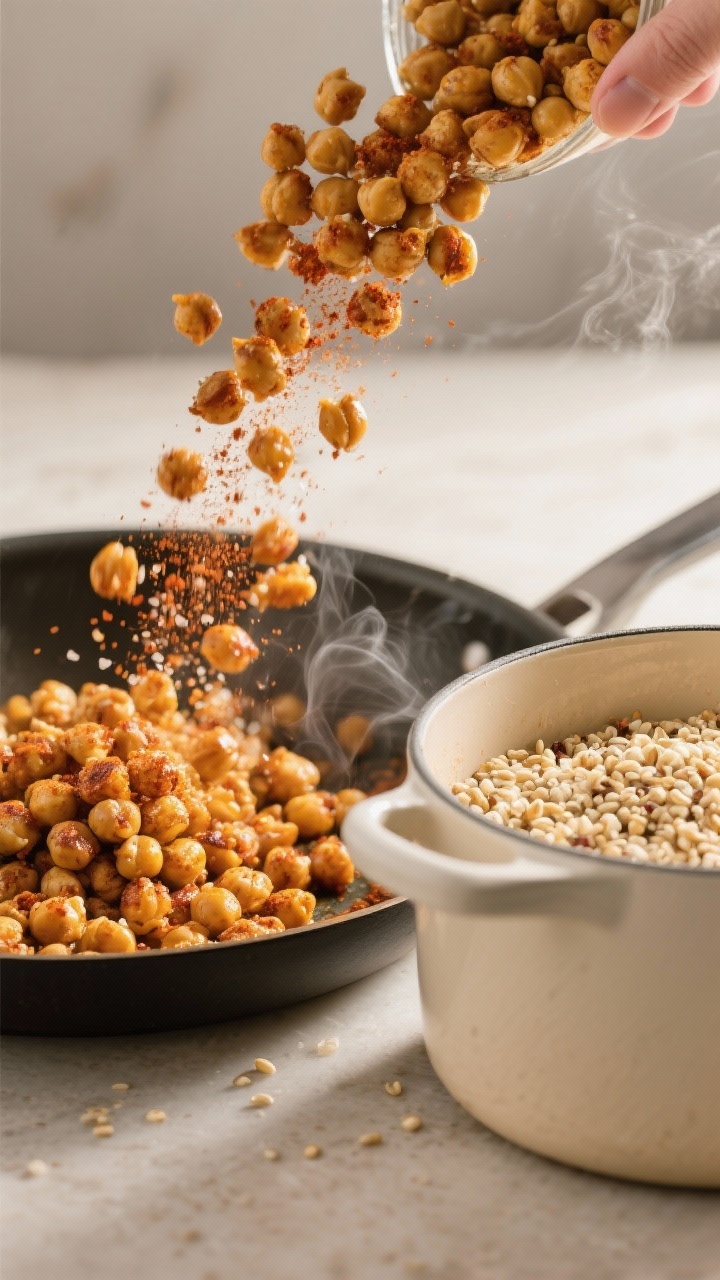
- Crisp the chickpeas (optional but great): Pat chickpeas dry, toss with a splash of oil, salt, and extra paprika, then roast on a separate pan for 15–20 minutes until golden.
- Cook the grain: While veggies roast, prepare quinoa, farro, or rice according to package directions.
Fluff with a fork and season with a pinch of salt.
- Make the dressing: Whisk tahini, lemon juice, maple syrup, and garlic. Add warm water a little at a time until creamy and pourable. Season to taste.
- Build the bowls: Layer greens, warm grains, and roasted vegetables.
Add chickpeas, avocado, and pepitas. Drizzle with tahini dressing and finish with a squeeze of lemon.
Keeping It Fresh
- Store components separately: Keep roasted veggies, grains, and dressing in separate containers for 4–5 days.
- Add fresh items last: Slice avocado right before serving. Dress the bowl when ready to eat.
- Reheat gently: Warm veggies and grains in a skillet or microwave, then add greens and toppings.

Benefits of This Recipe
- Nutrient-dense: Root veggies bring fiber, beta-carotene, and minerals.
- Steady energy: Complex carbs and healthy fats keep you full longer.
- Plant-forward: Naturally vegetarian and easy to make vegan.
- Budget-friendly: Root vegetables are affordable and widely available.
What Not to Do
- Don’t overcrowd the pan: Crowded veggies steam instead of roast and won’t caramelize.
- Don’t skip seasoning: Roots need salt and spice for depth.
- Don’t forget texture: Add something crunchy (pepitas, nuts) and something creamy (avocado, dressing).
- Don’t cut unevenly: Different sizes cook at different speeds and lead to mushy or underdone pieces.
Recipe Variations
- Spice swap: Try curry powder and coriander, or harissa and cinnamon for warmth.
- Protein boost: Add roasted tofu, tempeh, grilled chicken, or a jammy egg.
- Different grain: Use couscous, barley, wild rice, or cauliflower rice for low-carb.
- Add-ons: Sprinkle with feta or goat cheese, toss in pickled onions, or finish with fresh herbs like parsley or dill.
- Different dressing: Lemon-herb yogurt, miso-ginger, or a simple olive oil and lemon vinaigrette all work.
FAQ
Can I use frozen vegetables?
Yes, but they won’t caramelize as well.
Roast from frozen at a higher rack position and give them extra time, keeping space between pieces.
How do I keep the beets from staining everything?
Roast them on a separate pan and add them to the bowl last. Golden beets stain less and are a good alternative.
Is the tahini dressing nut-free?
Yes. Tahini is made from sesame seeds.
If you need to avoid sesame, try a sunflower seed butter dressing instead.
Can I make this oil-free?
You can. Toss veggies with a splash of vegetable broth and roast on parchment, though they’ll brown less. Use water to thin the dressing.
What’s the best way to reheat without drying out?
Warm veggies and grains in a covered skillet over medium heat with a tablespoon of water.
Add dressing after heating.
Wrapping Up
This Roasted Root Vegetable Buddha Bowl is cozy, colorful, and practical for busy days. It’s easy to customize, great for meal prep, and satisfying without feeling heavy. Keep the components on hand, and you’ve got a reliable, nourishing meal whenever you need it.