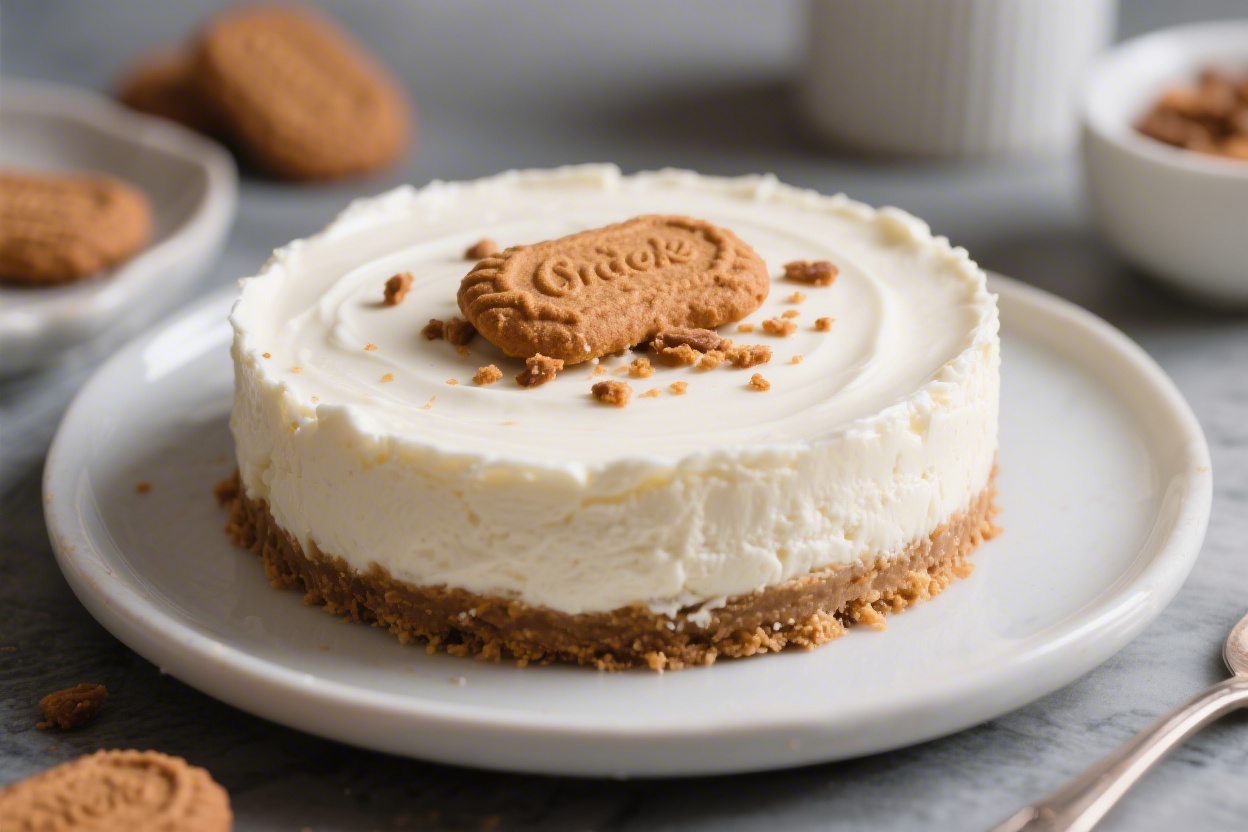
Greek Yogurt Biscoff Cheesecake (High Protein, No Bake)
This no-bake cheesecake brings together the tang of Greek yogurt and the caramel-spice magic of Biscoff. It’s creamy, light, and surprisingly high in protein without tasting “healthy.” There’s no oven, no water bath, and no fuss—just a smooth filling on a crunchy cookie crust. Make it the night before, chill, and slice when you’re ready to impress.
It’s the kind of dessert that looks fancy but takes minimal effort.
What Makes This Special
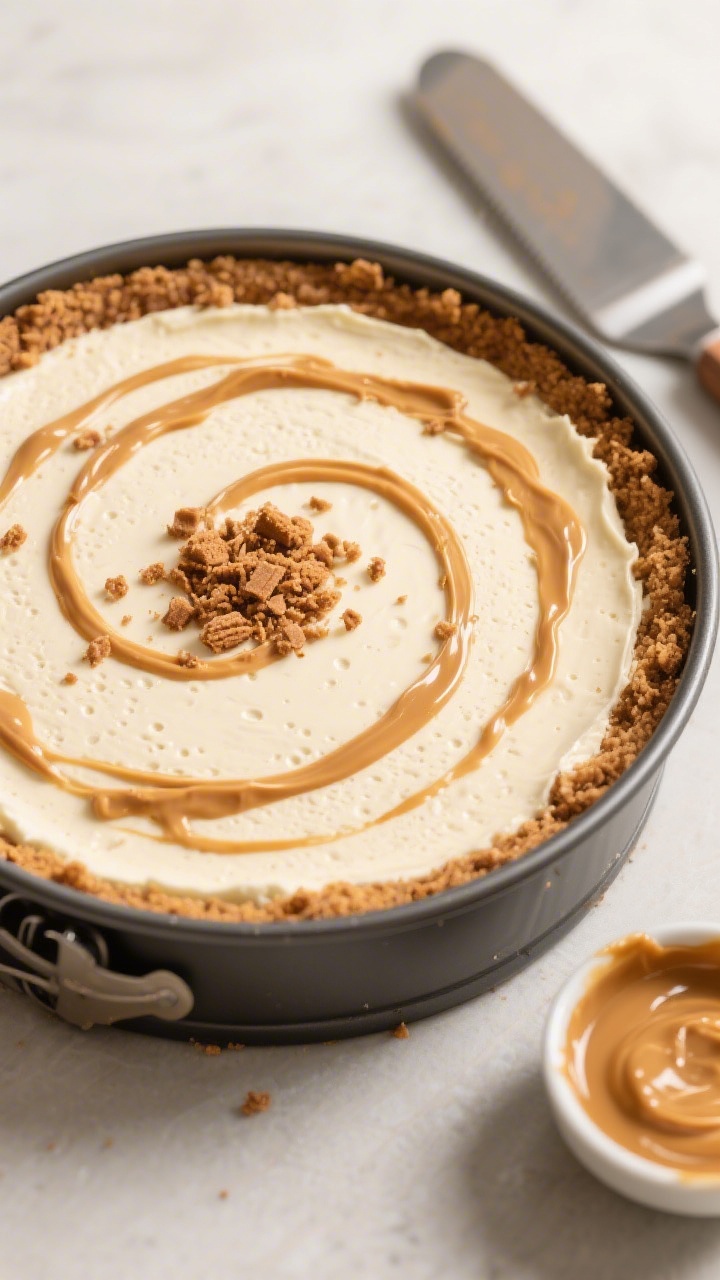
This cheesecake keeps the classic flavor you want, but with a lighter, fresher feel. Greek yogurt adds protein and tang, while reduced-fat cream cheese keeps the texture lush. The Biscoff crust gives a buttery, cinnamon-caramel crunch that pairs perfectly with the creamy filling.
Plus, it sets in the fridge—no baking or complicated tools.
What You’ll Need
- For the crust:
- 200 g Biscoff cookies (about 20–22 cookies), crushed into fine crumbs
- 60 g unsalted butter, melted
- 1 tablespoon brown sugar (optional, for extra sweetness)
- Pinch of salt
- For the filling:
- 450 g plain Greek yogurt (2% or 5%), strained if very runny
- 300 g reduced-fat cream cheese, softened
- 120 g Biscoff spread (cookie butter), room temperature
- 60–80 g powdered sugar, to taste
- 2 teaspoons vanilla extract
- 1 tablespoon lemon juice
- 1 envelope (7 g) powdered gelatin + 3 tablespoons cold water or 250 ml heavy cream, whipped to soft peaks (choose one to set)
- Pinch of salt
- For topping (optional):
- 2–3 tablespoons warmed Biscoff spread for drizzling
- Crushed Biscoff cookies
- Greek yogurt dollops or light whipped topping
How to Make It
- Prep the pan: Line a 9-inch (23 cm) springform pan with parchment on the base. Lightly grease the sides.
- Make the crust: Stir Biscoff crumbs with melted butter, sugar, and salt until it looks like wet sand. Press firmly into the pan, going slightly up the sides.
Chill 15–20 minutes.
- Bloom the gelatin (if using): Sprinkle gelatin over cold water and let sit 5 minutes. Microwave 10–15 seconds to dissolve, then cool slightly. If using whipped cream instead, skip this step and whip the cream to soft peaks.
- Beat the base: In a large bowl, beat cream cheese until smooth.
Add Greek yogurt, Biscoff spread, powdered sugar, vanilla, lemon juice, and salt. Mix until silky with no lumps.
- Set the filling:
- Gelatin method: With mixer on low, stream in the dissolved gelatin. Mix just to combine.
- Whipped cream method: Gently fold whipped cream into the filling with a spatula until uniform.
- Fill and chill: Pour filling over the crust and smooth the top.
Tap the pan to release air bubbles. Chill at least 6 hours, preferably overnight, until firm.
- Finish: Warm Biscoff spread until pourable and drizzle over the top. Add crushed cookies for texture.
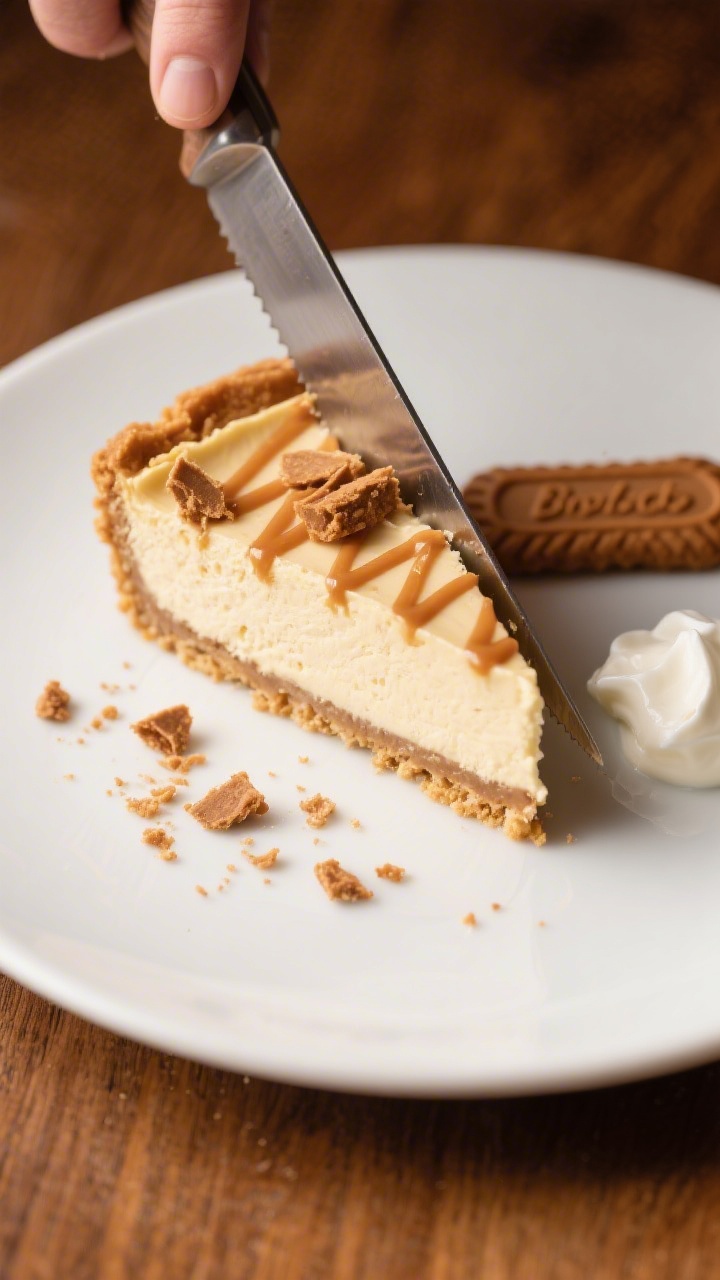
Slice with a hot knife for clean edges.
Keeping It Fresh
Cover tightly and refrigerate for up to 4 days. For the cleanest slices, chill the cheesecake well and slice just before serving. You can freeze individual slices wrapped well for up to 1 month; thaw in the fridge overnight.
Add any drizzles or whipped toppings right before serving so they stay neat.
Why This is Good for You
- Higher protein: Greek yogurt bumps up protein compared to classic cheesecake.
- Lighter feel: Reduced-fat cream cheese and yogurt keep it creamy without being heavy.
- No bake, less fuss: Saves time and avoids cracks that happen with baked cheesecakes.
- Balanced sweetness: Biscoff brings warmth and flavor, so you can use less sugar.
Pitfalls to Watch Out For
- Runny yogurt: If your yogurt is loose, strain it through a fine sieve or cheesecloth for 30–60 minutes. Too much moisture can prevent setting.
- Overmixing: Whipping in lots of air can cause a loose or bubbly texture. Mix just until smooth.
- Hot gelatin: If using gelatin, let it cool slightly before adding.
Too hot can create strings; too cool can clump.
- Soft crust: Press the crumbs firmly and chill the base before adding filling. Use enough butter to bind.
Variations You Can Try
- Extra protein boost: Add 1–2 scoops vanilla whey or casein. Reduce powdered sugar slightly and thin with a splash of milk if needed.
- No-gelatin option: Use the whipped cream method for a mousse-like set.
- Skyr swap: Use Icelandic skyr for an even thicker, higher-protein filling.
- Spiced upgrade: Add 1/2 teaspoon cinnamon and a pinch of nutmeg to the filling.
- Mini jars: Press crust into small jars, top with filling, and chill for easy portion control.
- Chocolate twist: Drizzle dark chocolate over the top or fold in mini chocolate chips.
FAQ
Can I make this without Biscoff spread?
Yes.
Use additional cream cheese and a little extra powdered sugar to balance sweetness, plus 1–2 teaspoons cinnamon for warmth. The flavor will differ, but the texture still works.
What if I don’t have a springform pan?
Use a deep 9-inch pie dish or an 8-inch square pan lined with parchment. Serve as slices or bars.
Is this suitable for vegetarians?
Yes, if you use the whipped cream method or a vegetarian gelatin alternative (like agar-agar).
Traditional gelatin is not vegetarian.
How do I prevent a gritty texture?
Use powdered sugar, not granulated. Ensure the cream cheese is fully softened, and beat until smooth before adding other ingredients.
Can I reduce the sugar?
Absolutely. Start with 40–50 g powdered sugar, then adjust to taste.
Biscoff spread and cookies already add sweetness.
How much protein does it have?
It varies by brands, but expect roughly 10–14 g protein per slice (1/12 of the cake) when using high-protein Greek yogurt and reduced-fat cream cheese.
Final Thoughts
This Greek Yogurt Biscoff Cheesecake hits the sweet spot between indulgent and feel-good. It’s creamy, lightly tangy, and richly spiced, all without turning on the oven. Keep it classic, or tweak it to fit your routine and macros.
Either way, it’s a simple, crowd-pleasing dessert you’ll want to make again and again.
Greek Yogurt Biscoff Cheesecake (High Protein, No Bake) - Creamy, Crunchy, and Easy
Ingredients
- For the crust: 200 g Biscoff cookies (about 20–22 cookies), crushed into fine crumbs
- 60 g unsalted butter, melted
- 1 tablespoon brown sugar (optional, for extra sweetness)
- Pinch of salt
- For the filling: 450 g plain Greek yogurt (2% or 5%), strained if very runny
- 300 g reduced-fat cream cheese, softened
- 120 g Biscoff spread (cookie butter), room temperature
- 60–80 g powdered sugar, to taste
- 2 teaspoons vanilla extract
- 1 tablespoon lemon juice
- 1 envelope (7 g) powdered gelatin + 3 tablespoons cold water or 250 ml heavy cream, whipped to soft peaks (choose one to set)
- Pinch of salt
- For topping (optional): 2–3 tablespoons warmed Biscoff spread for drizzling
- Crushed Biscoff cookies
- Greek yogurt dollops or light whipped topping
Instructions
- Prep the pan: Line a 9-inch (23 cm) springform pan with parchment on the base. Lightly grease the sides.
- Make the crust: Stir Biscoff crumbs with melted butter, sugar, and salt until it looks like wet sand. Press firmly into the pan, going slightly up the sides.Chill 15–20 minutes.
- Bloom the gelatin (if using): Sprinkle gelatin over cold water and let sit 5 minutes. Microwave 10–15 seconds to dissolve, then cool slightly. If using whipped cream instead, skip this step and whip the cream to soft peaks.
- Beat the base: In a large bowl, beat cream cheese until smooth.Add Greek yogurt, Biscoff spread, powdered sugar, vanilla, lemon juice, and salt. Mix until silky with no lumps.
- Set the filling: Gelatin method: With mixer on low, stream in the dissolved gelatin. Mix just to combine.
- Whipped cream method: Gently fold whipped cream into the filling with a spatula until uniform.
- Fill and chill: Pour filling over the crust and smooth the top.Tap the pan to release air bubbles. Chill at least 6 hours, preferably overnight, until firm.
- Finish: Warm Biscoff spread until pourable and drizzle over the top. Add crushed cookies for texture.Slice with a hot knife for clean edges.
Printable Recipe Card
Want just the essential recipe details without scrolling through the article? Get our printable recipe card with just the ingredients and instructions.